Monday, January 25, 2010


I think it was Rick who mentioned last time his concern with the inaccessibility of theory. Pierre Bourdieu’s Distinction does its darnedest to maintain that standard. When I felt myself zoning out every other page, I was reminded of the hopelessness of Adorno. Perhaps that’s the subtheme of our course?

But (melo)drama aside, there was a passage that really struck me:

It must never be forgotten that the working-class ‘aesthetic’ is a dominated ‘aesthetic’ which is constantly obliged to define itself in terms of the dominant aesthetics. The members of the working class, who can neither ignore the high-art aesthetic, which denounces their own ‘aesthetic’ , nor abandon their socially conditioned inclinations, but still less proclaim them and legitimate them, often experience their relationship to the aesthetic norms in a twofold contradictory way. (41)

(I think it’s ironic that Bourdieu puts the aesthetic of the working class in quotes as if to say allegedly they have an aesthetic. I guess he’s a highbrow)

It never occurred to me to think of the arts as a site of domination but when I read this section, it reminded me of works like that of Luce Irigaray who said there is no place for women in language because it is the realm of men, or Gloria Anzaldua who wrote about how she constantly has to translate herself to men, to white people, to straight people. They wrote about the difficulty of expressing themselves, who they are and how they feel because they were forced to speak in a place where they are dominated.

In effect, the hierarchy of brows and the management of taste has the potential to do a kind of violence, alienating people from themselves by denigrating ways of expressing themselves through art.

And what of effecting change? If one believe as I do that the master’s tools will never dismantle the master’s house (thank you Audre Lorde) by which I mean if we can’t change things using the dominant aesthetic precisely because it’s used to dominate, where do we turn in the arts to make a difference? If we turn to all low brow, there is the risk of simply inverting the taste hierarchy, or tokenizing/fetishizing low brow art. Do we turn to guerilla art or literary terrorists like Kathy Acker? Where is our way out? *sigh*

Adorno, I feel your pain.

Thoughts on Bordieu

Thoughts on Bourdieu

A crude summary of Bourdieu’s aim in at least the first one hundred pages of Distinction: A Social Critique of the Judgement of Taste is a sociological rebuttal to the Kantian and Arnoldian definition of culture being autonomously removed from the forces of economics. Through questionnaire surveys completed by 1,217 people across the categories of working, middle, and upper classes, Bourdieu observes and concludes that the distinctions between cultural tastes are determined by the class status one is born into and the level of education one attains. Taste hierarchies are created and naturalized by the upper classes. The consumption and appreciation of art is designated as a leisure activity and appears effortless without labor. “Material or symbolic consumption of works of art constitutes one of the supreme manifestations of ease” (55). They have enormous power in conferring the distinction between what is good tacky and what is refined. Culture is equated with capital, something with a market value that is owned and protected by a privileged minority. The phrase the “pure gaze” is mentioned often and defined as “a break with the ordinary attitude towards the world which, as such, is a social break” (31). Those with the power of “aesthetic disposition” erect the boundaries that separate the cultural tastes between classes. For example, Bourdieu writes that the purpose of working class aestheticism is to provide a model of what not to appreciate by classes higher on the ladder. “As for the working classes, perhaps their sole function in the system of aesthetic positions is to serve as a foil, a negative reference point, in relation to which all aesthetics define themselves, by successive negations” (57). The practice of upper class taste formation as defined by it’s opposite is not without pernicious repercussions. Bordieu writes, “…but because each taste feels itself to be natural – and so it almost is, being a habitus – which amounts to rejecting others as unnatural and therefore vicious. Aesthetic intolerance can be terribly violent. Aversion to different life styles is perhaps one of the strongest barriers between the classes” (56). In a sense upper class taste formation is a process of violent exclusion. Knowledge of the arts is construed and manipulated towards the obscure and inaccessible. Levine’s articulation of audience participation as a way to engage and create cultural meaning is briefly discussed by Bourdieu. The “deep-rooted demand for participation” among the working class is kept at “at arm’s length” by the obscurity of content and references in an artistic production.

The historical origin of these taste hierarchies is briefly mentioned as beginning in the seventeenth century, but an elaborated discussion of where, how, who, and why this particular time period is significant for the emergence of this phenomenon seems absent in at least the first hundred pages. Also, to apply the distinctions raised by Bourdieu to contemporary American society would probably fail to reveal a corresponding analogue. Postmodernism has flipped and eroded categories creating more complex, fluid, and ultimately more confusing taste categories as created and consumed by society.

Matt Nelson

Funny Games (this is far over the limit)

By opening Funny Games (1997) with a classical music guessing game, director Michael Haneke points to a similar survey presented in Bourdieu’s Distinctions. Haneke’s films target an upper-middle class bourgeois audience that might be prompted to guess along with the family on screen. The flash of the title card and a jarring sound-burst of heavy metal quickly, and quite disturbingly, interrupts this enjoyable game. Incessant screams drown out the sound of laughter and classical music. The audience might be frightened or amused by this gesture, but in many ways they are in on Haneke’s game already. Those not ‘in on the game’, or excluded by the game, are presumed not to have the academic or cultural training required to understand Haneke’s condemnation.

Bourdieu explains that an encounter with art is not purely one of ‘love at first sight’ but rather one of empathy (3). The Haneke audience may empathize with Haneke for his trick. Most importantly, this audience empathizes with Haneke as a creative producer. The social and academic knowledge of the filmmaker is supported when Bourdieu states, “In identifying what is worthy of being seen and the right way to see it, they are aided by their whole social group (which guides and reminds them with its ‘Have you seen?’ and ‘You must see…’) and by the whole corporation of critics mandated by the group to produce legitimate classifications and the discourse necessarily accompanying any artistic enjoyment worthy of the name” (28).

I wondered at such a claim when Bourdieu highlighted the survey regarding varying groups’ knowledge of directors, specifically that, “Knowledge of directors is much more closely linked to cultural capital than is mere cinema-going” (27). Bourdieu’s next claim that, “indeed, these least-educated regular cinema-goers knew as many actors’ names as the most highly educated” seems to suggest that star knowledge of a film is less significant (or maybe more accurately for Bourdieu, less a product of cultural and academic capital) than knowledge of film directors. I wondered why this was valued as such considering that many people associate the greatness of a Frank Capra film with Jimmy Stewart, and not always with Capra. This too is a specialized discussion, one spurred by personal and academic capital in that realm.

Yet specialization of a certain type of culture (knowledge of composers, directors) is characterized in Bourdieu as a product of specific types of academic and social education. In fact, part of education is to align and label the two as whole:

“The official differences produced by academic classifications tend to produce (or reinforce) real differences by inducing in the classified individuals a collectively recognized and supported belief in the differences, thus producing behaviours that are intended to bring real being into line with official being.” (25).

He does not consider the same sort of social education of star culture as akin to knowledge of directors. Bourdieu claims that highbrow forms with obscuring qualities could be seen by ‘working class’ as a game that excludes them. This assumes that these types of highbrow culture need training and specialization in a way that working class culture does not, or to suggest that working class sporting culture or music cannot offer as much complexity. Yet anyone ignorant to those sports would also be socially and academically insufficient in knowing the key players, terms, movements, or tactics. They too might feel excluded from the game.

The key for me in all of this goes back to empathy. Why is it that I (as an admitted cinema viewer) identify a film as a Capra film or a Haneke film? Is it not merely of the same impulse as fandom or interest in stars? My empathy, and I posit the empathy of Bourdieu’s bourgeois class, is that of identification with creators of cultural objects (we see actors under directors, Hitchcock called them “cattle” which we chuckle unapologetically about). Their identification is that directors are presented as ‘in charge’ and can create a film or work in their ‘image and likeness’; to create a product that not only reflects them as humans but might also remain as theirs (they can enjoy profit and acclaim from this product). They like them because they think they are in on the game, while others are not. This is part of the distinction, that pleasure is derived from thinking that one is a player of creation and not a pawn.

Bourdieu

In the first chapter of his book, Bourdieu examines taste’s relationship to class and how taste is affected by education and experience. While I agree with his overall theory, I take issue with his verbiage when referring to taste, culture, and class. I find his repeated use of the phrase “legitimate taste” when referring to what we commonly refer to “highbrow” insulting. Categorizing the most refined level of taste as legitimate makes the assumption that all lesser tastes are illegitimate. There is nothing illegitimate about any level of taste, whether it be an upper-class affinity for classical music and opera or a lower-class fondness for genre fiction and the Jonas Brothers.

I find Bourdieu’s statement that popular music is “totally devoid of artistic ambition or pretension” (16) as rather stuck-up and short-sighted. While music and art that holds popular appeal rarely meets “legitimate” standards, I find it unfair that Bourdieu takes it upon himself to judge the popular artist’s ambitions. Just because a piece of art has mass appeal does not mean that it automatically lacks artistic integrity. While mediocrity may often cause popularity, popularity should not automatically be an indication of mediocrity.

I felt Bourdieu summarized nicely a concept each of our readings so far this semester have tried to explain. “Being the product of the conditionings associated with a particular class of conditions of existence, it [taste] unites all those who are the product of similar conditions while distinguishing them from all others. And it distinguishes in an essential way, since taste is the basis of all that one has – people and things – and all that one is for others, whereby one classifies oneself and is classified by others” (56). Since the upper-class with “legitimate” taste are also the self-appointed arbiters of taste, it stands to reason that they have the most to lose should their tastes mingle with those of the lower classes. The concept of taste distinctions is beneficial only to the upper class who needs to be able to identify themselves as more refined and more enlightened than the lower-class. By ensuring that “legitimate” tastes are the most expensive and achievable only through education, they ensure their place as the world’s cultural elite is secured. As Bourdieu points out, taste is not an innate trait. It is learned and practiced. By ensuring taste distinctions, the high-brow also ensure class distinctions.

The High Art of Sociology

Wow... talk about a thorough and exhaustive ethnographic study taste. From a sociological and scientific standpoint I drew some objections and inconsistencies in his practice and methods, however his interesting and predictable his findings proved to be.
First of all, in the introduction and the first part of Section I, Bourdieu was quick to acknowledge the fact that his survey and matrix was at once French and applicable to the distinctions of taste of all people, and though he intended this not to be strictly a French exploration, it certainly came of that way. Perhaps I am just a working class person who prefers Blue Danube to Well Tempered Clavier, or perhaps it's because I am just an American without the necessary building blocks of culture because I was raised on film and jazz, but what Bourdieu seems preoccupied with is not the stratification of high and low culture, but with items of taste (not particularly high brow or low brow) His insistence that the more well cultural (and favorably employed) find beauty in objects, images, and music not typically associated with says more about the Bourdieu and the objects Bourdieu chose as examples rather than the aesthetic competencies, shortcomings, and class of his subjects.
If there is one thing we can use from the Levine reading in this instance, it is that tastes and the objects of those fetishes change rapidly and without regard to what is “better” or “more complicated” art. Just as Shakespeare was “elevated” from common theater culture to the Bastian of Western Literature and Art, so too could the objects of which Bourdieu proposes to be low or high culture. Perhaps those working class people in France who prefer the aesthetic experience of a sunset to a car crash are just ahead of the curve, or through their “naiveté” are expressing the universals of artistic experience. Those who prefer the impressionists to the cubists are not merely unsophisticated in their tastes and sensibilities, but merely uncomplicated.
Frankly, as complete as his study was in many aspects, I think he failed to see that he in his own way was imposing his cultural expectations of what constitutes high and low forms of art. I understand he is working within the parameters of what is accepted as culture, i.e classical music and painting. However, in doing so he is showing his own cultural hand, in the poker game of sociology, which is often a no-no in ethnographic research. I cannot argue with his proposals and maybe not even with his conclusions, I would like to see a similar study done in which the people themselves create the criteria which is popularly judged to be higher or lower on the rungs of the cultural ladder.

While the idea of linking aesthetic taste to class is really interesting, Bourdieu does an excellent job of making it incredibly boring with winding sentences that could have used serious editorial assistance and over-analyzed data.

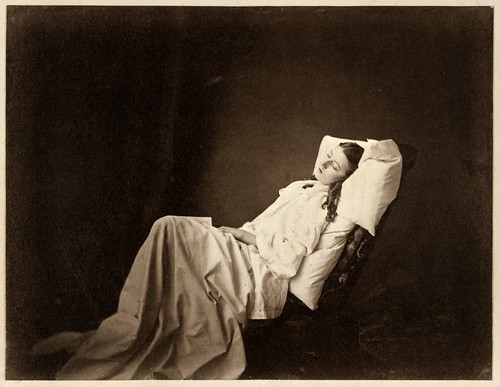
The only section that I thought was truly compelling—and only because I love photography, not because of Bourdieu’s writing skills—was the section on photography. First, I thought that his reason for using photographs—“partly to avoid the legitimacy-imposing effects of paintings and partly because photography is perceived as a more accessible practice, so that the judgments expressed were likely to be less unreal” (39)—was something to consider. The controversy of whether or not photography is actually an art has haunted the medium throughout its existence. Invented in 1839, the daguerreotype was actually an image that was developed onto metal plates, followed closely by the cyanotype and the albumen silver print. Some argue that photography in its incipience was more aesthetic because it took more effort on the part of the photographic artist, not only in terms of capturing the image, but also in developing the print. Additionally, the first images were often composite images, meaning that the final photographic image was actually produced by layering several different photographs of the same image, as demonstrated with Henry Peach Robinson’s Fading Away, 1857, above (there were several more stages to compositing this photo, the reclined woman [also developed on its own as She Never Told Her Love, and showed at it the same exhibition], each of the women framing the reclined woman, and the man at the window, but I couldn’t find all of the stages). So the value of the image corresponds to the amount of effort the artist has to invest in his or her work. The idea of accessibility though, both in terms of artist and audience (that is, it takes less skill to produce a photograph than a painting, and it’s easier to interpret something that seems quotidian than it is to give an opinion of an objet d’art)—especially in the digital age in which anyone with a Nikon can capture a beautiful image—results in the devaluation of the medium as a whole. Photography, then, is often considered inferior to other media, which led Bourdieu to call it a middlebrow art (Photography: A Middle-Brow Art).

I thought the most intriguing part of this section, though, was the interviewees responses to the image of the woman’s hands. The lower-class respondents saw arthritis and deformation, then people of a slightly higher class saw a woman who had worked too hard in her lifetime, and the elites saw something reminiscent of van Gogh’s work or Flaubert’s servant woman. I thought it was interesting that the people of the upper-class actually saw the hands as something truly aesthetic, associating it with the works of established artists. It was funny that the everyday reality of the lower classes fuels the aesthetic of the upper classes.

Agency Outside of the Habitus?

The first time I engaged with Bourdieu’s work was during my Language & Culture course last semester, where we applied his notion of the “habitus” in his text Language and Symbolic Power to our study on sociolinguistics. Bourdieu defines the habitus as the structure of an individual’s mind, which influences his or her behavior, sensibilities, disposition, and most interestingly, taste. Furthermore, institutions in our society, especially educational institutions, are largely responsible for the construction of the habitus. What I found so interesting, however, was that each individual, overpowered by his or her habitus, becomes complicit in the maintenance and perpetuation of social structures, traditions, and ideologies; hence Bourdieu refers to the habituses as “structures predisposed to function as structuring structures.” What makes the habitus so powerful is that it is so well-hidden to the extent that an individual is totally unaware he or she is not really practicing free-will when it comes to such things as taste. We our programmed to find tasteful only what our conditions determines us to find tasteful as well as to finding other things distasteful and unworthy of examination because our conditions determine us to find them distasteful. I think that this is very scary.
What I have been dwelling on so far is the question of whether the individual has the agency and power to escape his or her habitus. I think there is a lot at stake here when it comes to finding the answer to this question. Why? Because there are various practices we should not allow our habituses to generate and regulate, with one of the most negative practices, in my opinion, being the judgment of taste. I strongly believe that the judgment of taste leads to harmful generalizations and stereotypes about groups of people. Quantifying a human being by their taste can be detrimental, especially when one considers past experiences of one group judging the other by their skin color, heritage, or religion. I’m not saying that everyone who gets caught reading Twilight, watching Jersey Shore, listening to rap music, or eating fried chicken might be subjected to physical harm, but I do think this judgment of taste needs to be taken seriously and its ramifications should be studied to the fullest extent. For example, on several occasions I have refused to be caught eating fried chicken and watermelon in public. Why? Because I have been programmed by society to link this taste in food to the stereotypical black individual who is uneducated and unsophisticated. As funny as this might sound, this is the type of judgment of taste that I consider harmful and dehumanizing, and, unfortunately, this preposterous notion that taste ultimately dictates intelligence still exists.
This leads me into the subject of educational institutions and their involvement in the construction of the habitus. Bourdieu states in Distinction, “…we must first stop to consider what is perhaps the best-hidden effect of the educational system, the one it produces by imposing ‘titles’, a particular case of the attribution by status, whether positive (ennobling) or negative (stigmatizing), which every group produces by assigning individuals to hierarchically ordered classes” (23). I believe that there must be a dramatic cultural shift within educational institutions, with the result being that no student is programmed to believe that their culture and taste is inferior to another’s. I fully support African-American pragmatist Dr. Cornel West’s suggestion that blacks in particular (I believe this can apply to everyone) become “cultural workers” in their fields by practicing “demystification,” in which the complex inner-workings of institutions and other related power structures are exposed. Once these dynamics are exposed and their affect on the individual examined can there be any move toward transformative praxis within these institutions. Essentially, West does believe in agency outside of the habitus. However, the first, (and probably most difficult) step is the acknowledgement of the habitus and realizing the role institutions play in instilling certain dispositions and preferences.
Bourdieu is hard to read for his concepts are a little slippery to me. I am spending most of my time to understand his theoretical framework and his sociology theory behind the phenomenon of taste.

Bourdieu’s theory tells us, the Social stratification is not the result of enforcement; instead it is dispositions gradually and unconsciously developed from the social conditions that individuals encounter. Then the subjective structures of the individuals dictate each one to live the way their class is expected, thus reinforce the distinctions and reproduce the social structure. Bourdieu emphasizes the “unconscious” process of habitus. To him habitus is not the result of rational calculation, but a certain state of mind acquired gradually in a certain social condition. Bourdieu’s frequently cited example is that the working class can never understand the meaning of luxury consumption—they regard it as a waste of money. He says, people always think they choose what they like. Actually it’s just they like what they happen to possess. If habitus derived from the growth environment of individuals, and this environment is decided by each family’s position in social classes, then people eventually would only like what their classes should like. But in fact, we know that to make a person just like what he happen to possess is very difficult. How would Bourdieu answer this question?

Also, from here I feel Bourdieu has a little similarity with Marx and Gramsci. They both emphasize that the ruled class cannot see their true interest because of the ideological indoctrination. For Gramsci, in consequence we need the organic intellectuals to enlighten everyone—once people are aware of their class positions, the problem is easy to solve. Obviously Bourdieu wouldn’t agree with this opinion. For one thing there is no class consciousness that is independent from social life. For another, the way people are divided into social classes is itself a product of social stratification. To not resist means acceptance of stratification; to resist means the recognition of the rules of stratification. The former reinforce the social structure; the latter reproduce the social structure itself through struggle.

What’s intriguing is that at the same time Bourdieu lays great stress on the strategy of action. I can’t help but wondering, didn’t he say people are not conscious of their being restrained by the social structure? The design of strategy should base on Weber’s sense of rational calculability, while rational calculability should base on the understanding of structure. Since people are not conscious of the restraint, then how could they design strategy of action according to their position? Bourdieu’s answer is that the strategy is based on the urgency of practice. The theory of practice is different from the theory of rational choice. The latter has it that people take conducive actions to themselves because they already know where their interests lie and make precise calculations. The theory of practice is that people are familiar with the rules long under a certain condition. Even without a rational calculation, they are able to take the right actions. For example when facing a ball a tennis player simultaneously knows how to swing the racket without calculating the speed of the ball.

Here I have another question, can this timely strategic readjustment eventually change the structure of the society? Bourdieu suggests the field is dynamic. Every field has its own rules and people in it pursue their goals under these rules. However, it could appear anytime that people inside a field would question the legitimacy of these rules. Also the definition of a goal itself could also be strategic struggles.
Bordieu’s discussion of music is of particular interest. Bordieu breaks taste down into three different divisions: legitimate taste, middlebrow taste and popular taste. The most interesting point in Bordieu’s discussion comes when he talks about popular taste. Bordieu asserts that within popular taste the preference of the individual leans more towards “works of so-called ‘light music’ or classical music devalued by popularization” (16).
It is interesting that Bordieu would classify classical music devalued by popularization within the sphere of popular taste. In Bordieu’s hierarchy popular taste is situated as being lower than the other spheres of taste. It’s interesting that Bordieu would classify popularized classical music within this sphere. This seems to suggest that in becoming popular a work of art loses its value. There is no given change to the intrinsic worth of a given piece of art, music or literature, yet the fact alone that it is popular has led to it of being of lesser value. This line of logic seems suspect. How can the popularization of a given work lead to a reduction of its artistic value?
Bordieu goes on to assert, “nothing more clearly affirms one’s ‘class’, nothing more infallibly classifies than tastes in music. This is of course because, by virtue of the rarity of the conditions for acquiring the corresponding dispositions, there is no more “classifactory’ practice than concert going or playing a ‘noble’ instrument…” (18). This is one point in which Bordieu’s study shows its age. While the bit about playing a ‘noble’ instrument may still hold true today, the part about concert going does not. In an age where music is readily available to anyone with an internet connection, it seems that such definitions of taste based on musical preference are highly outdated. While educational capital may still play a role in such preferences, it seems that anyone could stumble upon such a cultivated piece of music as “Well Tempered Clavier” for download on the same blog as the new Lil’ Wayne album. In this regard, Bordieu’s view of the acquisition of musical taste is proven to be outdated by the dissemination of music, legitimate, middlebrow and popular, on the internet.
Bourdieu attempts to account for cultural taste by linking it to economic and social hierarchies in French society. He came up short for me in two places: he did not seem able to fully account for the usefulness of inutility in social life or for the desire to transgress aesthetic norms.

For both I would refer to his quotation of Proudhon criticizing “art for art’s sake” on page 49. Proudhon (a 19th century social anarchist) is quoted at length and blames “verse for verse’s sake” and “form for form’s sake” for the decadence and vice he saw plaguing France at his time. After reading Bourdieu’s characterization of the “working class aesthetic” (41) as one concerned with wasting both time and materials on art that seemingly serves no purpose, we might find ourselves sympathizing with the sentiment behind Proudhon’s statement. However, in a portion of his Economic Contradictions NOT quoted by Bourdieu, Proudhon goes further: “love for love’s sake leads to unnatural vice, onanism, and prostitution; art for art’s sake ends in Chinese knickknacks, caricature, the worship of the ugly.”

It seems today we would spontaneously reject this. The notion that the “purpose” of love should be to produce offspring or that art should (or could) again take up its religious mission of reproducing norms to teach us how live strikes us as reactionary. Bourdieu misses the opportunity to show how the so-called autonomous art of the bourgeois can be more than a mere conspicuous consumption of resources and fruitless expenditure of energy, and can, in fact, prefigure the creative practices of a society emancipated from the logic of capital.

For all Bourdieu’s discussion of Kant he never mentions Lacan’s 1963 essay Kant avec Sade, in which he posits that the presence of the Law actually generates the desire for its transgression. The jouissance (as surplus enjoyment) that comes from transgressing aesthetic norms might supplement his economic explanation of aesthetic transgression regardless of its basis in social status.

Bourdieu references “ben’s heap of coal” on page 33 claiming it was designed to be an affront to common sense. Recent exhibits and sculptures featuring piles of bricks and construction materials are also designed to shock people into recognizing the art of everyday life, or rather to recognize the creative potential in their mundane labor. It seems like this type of aesthetic consumption invites us not to bracket off art from daily life but to invite daily life into the sphere of art. This type of work “serves a purpose” and coincides with the artist’s desire to transgress as well as the desire of the audience to be shocked; but the secret pleasure that comes from being offended doesn't seem able to be accounted for in strictly economic terms.
1. Bourdieu's analysis of French society is structured around the opposition between the aesthetic disposition--the pure gaze--and the popular disposition. The pure gaze elevates form over function, which implies a distancing from the world. The popular disposition elevates function over form and wants its art to be human and concerned with emotions and morality. These dispositions spread out from the narrowly aesthetic to manifest themselves in all areas of life. Even what kind of rice you buy and where you buy it is linked to your underlying taste disposition.

2. There is a strong pessimistic aspect to Bourdieu's portrait. The pure gaze is tightly linked to the upper classes, those who possess the greatest amount of educational and social capital. (There is a complicated relationship between educational and social capital. Sometimes it is conflictual but often it is collusional.) This is a hierarchical, immobile society. Bourdieu's Aristotelianism adds to this pessimism. Tastes are competences which must be acquired by slow habituation. They "cannot be transmitted solely by precept or prescription." (66) In other words, you have to grow up in a house furnished with antiques to really be able to pull off the pure gaze.

3. However, there are several factors which mitigate this pessimism for me. First of all, Bourdieu's analysis is very place- and time-bound. French society is more of a closed hierarchy than American society, especially pre-1968 French society. Bourdieu admits that he has uncovered generational differences which may lead to a more open French society in the future. (83) In addition, his dispositions are defined with too great a focus on modernist painting.

4. This brings me to my second reason for not being so pessimistic. I do not like the pure gaze. I think it is clear that modernist art has degenerated into a silly cul-de-sac, which shows that
something was amiss with this stance all along. For me, great art is moral art.

5. Bourdieu actually also does not have too high an opinion of the pure gaze. For him, the
pure gaze is a kind of superficial, confident bluffing. For Lynes, the lowbrow were the
anti-intellectual children. This is, ironically, Bourdieu's view of the elites who practice the pure gaze. (52, 54)

6. Another reason for my lack of pessimism is that I have found that bitterness towards elites only leads to dissatisfaction.

7. Also, Bourdieu's opposition is too binary. For example, "Brokeback Mountain" is not an example of popular culture, but it has a devastating emotional impact.

8. Bourdieu is clearly ambivalent about his methodology. He recognizes that the terms he uses in his statistical analysis are contested--in fact this contest is what his study is about--but argues that his use of a "field" view will enable him to create the objective categories his statistical analysis requires. (12) That he has not even convinced himself of this is shown by
how often he reverts to this topic. He is worried that statistical analysis is "essentialist" (19) or "substantialist" (22) and must be supplemented by close analysis of the factors under consideration. By the end he has actually made a convincing case for "thick description" (Geertz). For my part, I have found that a little methodology goes a long way. Otherwise methodology can become a black hole from which you cannot escape. It is best just to get on with it.

9. Bourdieu's presentation of Kantian aesthetics is misleading. Kant did argue that disinterestedness--"pleasure purified of pleasure" (66)--is the central aesthetic quality, but art has a moral function for him. Since Kantian ethics is a matter of duty not inclination, the
disinterested aesthetic stance is supposed to be training for his similar ethical stance. Kant's ethics has been attacked for being unrealistic, and I think similar criticisms can be raised about his aesthetics and thus against the pure gaze.

10. I disagree with Woolf's claim that "Pride and Prejudice" is a perfect object for the pure gaze. (35) While no doubt it is a finely wrought novel, it is a blistering social critique and has many scenes of deep emotion. It is my favorite novel.

11. I like Petula Clark. She did record a lot of songs in French, but I do not know why.

Sunday, January 24, 2010

Does anyone even have Cocktail Parties Anymore?


Bourdieu is not afraid to step away from things. The distance he gives us between our objects of study (culture) and our methods of analysis lets us see the humane arts in sociological way. Though not for the faint of heart, the process allows to register connections within a complex and diverse matrix of relations that enable our supposedly internal reception to objects of taste. Naturalization of judgment is a central problem for Bourdieu and something that we as students and educators cannot afford to take for granted. For all the years of learnin' and sophistication, we are the aesthetes' worst enemy; we are all, in some sort or another, loud-mouth pedants. Our senses of refinement comes from the pedigree of the best institutions, the smartest professors, and by reading the best books (assigned to us by these aforementioned gatekeepers). And now we have the responsibility to inform everyone we can just how much we know about everything. We have become expert cocktail party guests, but would the people at these parties really want to invite us?

Bourdieu investigates the "ideology of natural taste" via distinction between the gastronome and the gourmet. "Whereas taste" Bourdieu cites de Pressac, "is the natural gift of recognizing and loving perfection, gastronomy is the set of rules which govern the cultivation and education of taste. Gastronomy is to taste as grammar and literature are to the literary sense" (68).

The gastronomes illustrate what Bourdieu calls illusio, or, belief, in " an involvement in the game which produces the game" (86). Scholars, or students of taste, need to be instructed in the rules of the game, they do not come naturally, which makes the whole mechanism of culture even more shadowy and serpentine. Money does not guarantee high-taste or brow status per se, and neither does learning/practice. The exchange rate of cultural capital from the almost infinite subject positions is dynamic and, even more importantly, speculative. It's easy to think from our sheltered position within the academy that we have some kind of purchase on taste, but taste in not unilateral. It gets put to many purposes, and signifies differently to many separate groups. We may no longer be masters of the cocktail party, Kenneth Burke's famous metaphor for academic writing notwithstanding. The sociologist of culture (or maybe the cultural studies-ist) cannot limit their purview to intra-institutional concerns, nor can they only investigate the enclaves of the highest-brow, the art producers. The coexistence and friction between and within these groups is where, for Bourdieu, the culture we want to study resides.

Saturday, January 23, 2010

Everyone Has Access to Culture

While reading the Bourdieu I noticed a connection to Russell Lynes’s “Highbrow, Lowbrow, Middlebrow” article: the idea that mass media has made culture available to all. Lynes suggested this in his piece in 1949, and Bourdieu quotes a 1968 article by Suzanne Langer that also makes such a claim. I want to look at these two passages and consider the conditions under which it might have made sense in 1949 or 1968 to make such an argument, which I think today we (for good reasons) are probably very skeptical about.

In his piece Lynes talks about how the nervous highbrow wants “to protect the arts from the culture-mongers,” and Lynes suggests that “The fact that nowaways everyone has access to culture through schools and colleges, through the press, radio, and museums, disturbs him deeply” (21).

In Bourdieu’s book he quotes Suzanne Langer’s 1968 essay “On Significance in Music,” which makes the same case about accessibility of culture and does so almost in the exact same terms that Lynes uses: “In the past, the masses did not have access to art [. . .]. But now that everyone can read, go to museums, listen to great music, at least on the radio, the judgment of the masses about these things has become a reality” (qtd. in Bourdieu 31).

Like I suggested earlier, today most of us are skeptical about the claim that everyone has access to culture; we might respond to the claims of Lynes and Langer with nostalgia and proclaim them optimistic but a bit naïve. Everyone can read? Everyone can go to college? Everyone can go to museums? Those broad claims seem unlikely to me, as does the smaller claim that people who use technologies like television, radio, or internet have access to “culture” or Culture in the same way that elites did in the past. So, how does this make sense? Why did Lynes and Langer make such claims?

Lynes’s essay is very late forties, and his claim about accessibility is grounded in that period, too. For instance, did you notice that Lynes mentions school and college in 1949 whereas Langer didn’t in 1968? Part of this has to be the G.I. Bill, right? Invented in 1944, the Bill offered education benefits to all those who’d returned from WWII, so in 1949 it’s understandable that Lynes felt like anybody could go to college. The fact is, more people probably were going to college in 1949 than ever before. Still, Lynes’s claim is misguided: radios were not super cheap in 1949, and television sets would have been prohibitively expensive. And as Levine tells us, ever since the early part of the 20th century, dirty and otherwise undesirable people were not welcome in museums—not everyone could go.

Langer doesn’t mention education or college in 1968. It might be for no reason at all, or it might be because by then people were more skeptical about the idea that anyone could go to college. Her emphasizing radio makes some sense: in 1968 cheap and portable Japan-made transistor radios were becoming available, FM programming was around the corner, and there were enough 50, 000-watt AM stations in the United States to reach not every, but most corners of the country. On the other hand, her claim that “everyone can read” seems uncomfortably misguided. On Wikipedia I found a chart that suggests that in 1968 about 35% of the world’s population was illiterate. We can assume that Langer is referring to Americans only, but even if she is, we know perfectly well that not everyone in the United States was literate in 1968: what about the kid in the Detroit ghetto? What about the middle-aged farmer in rural Mississippi?

Today the flaws in the claim of “universal access to culture” seem obvious, but the question remains, why did Lynes and Langer make such claims? Did the “newness” of media just overwhelm them or something?

Monday, January 18, 2010

Thoughts on Levine

In the third chapter, “Order, Hierarchy, and Culture” Levine discusses how American audiences at the opera, theater, museum and concert hall became more docile and passive in the late 19th century. He writes that audiences “had become less interactive, less of a public and more of a group of mute receptors. Art was becoming a one-way process: the artist communicating and the audience receiving” (Levine, 195). He further iterates that the “champions of high culture” trained and taught the audience to receive the performance individually, not collectively (195). Moreover, Levine argues that the audience’s silence deferred authority to the performers and critics, further widening the gulf between the taste arbiters and receivers. Levine thus presents evidence of a decline in the outward physical response to a performance, but this lack of engagement is only one type of reaction. Levine seems to put a lot of emphasis on audience interaction during the performance. I would be curious to know what audiences discussed with each other at the intermission or after the performance. Approval, disapproval, and general impressions of a show communicated in conversation must have taken place. Also, it would be interesting to track down written records of reception among general audiences found in diaries or community bulletins/newspapers. The interaction with a performance doesn’t necessarily end when the curtain goes down. Individuals quietly taking in a show are still formulating ideas, opinions, and reactions to what they’ve witnessed, and once this is shared in a community, consensus opinions are formed. These opinions may or may not influence the content of a future performance, but the audience has a little more agency than Levine credits.

Levine briefly mentions how sports and religion elicited more physical participation from people than those attending for example, a theater performance. Regarding sports he writes, “…it is necessary to look to the athletic arena to find the equivalent of the nineteenth-century audience in which the spectators feel like participants, manifest a sense of immediacy and at times even of control, and articulate their opinions and feelings vocally and unmistakably” (195). The topic of sports in general seems to be absent from a cultural taste investigation. Russell Lynes has taste categories for clothes, furniture, useful objects, entertainment, salad, drinks, reading, sculpture, games, etc. but in his chart and article he never mentions where sports fit in the distinctions between highbrow, lowbrow, and middlebrow. To go back to Levine, it would be interesting to do the same kind of historical inquiry that he does with the examples of Shakespeare and opera, and focus on the brow attachments to sports. What was lowbrow sport in the 19th century? What was highbrow? How has it changed (or not) over time? Has audience participation in sports always been active? How has audience etiquette changed? Which sports does this apply to?

Matt Nelson

In his introduction to Highbrow/Lowbrow, Lawrence Levine explicitly defines the thesis of the book to be that the hierarchical valuations of culture (i.e. high-middle-low brow) are not as rigid as one might think. Their mutability is rooted in the fact that they are based on ideologies that are “always” subject to alteration. Levine’s work is an attempt to illustrate how the stratification began to appear as naturally fixed. The stakes of his project seem to lie in the concern over whether or not the inflexibility of the hierarchy limits one’s ability to understand culture. For me, this is the most important part, the “so what factor, “ if you will; the importance of his work hinges on the idea that being able to understand culture “better” is a worthwhile project.

Levine’s third chapter “Order, Hierarchy, and Culture”, traces the beginnings of the solidification of the stratification of culture. He points to the alienation men of a certain class in time, men from families who, by the 19th century, had been in America for a while, felt as a result of a rapid cultural shift in America. Specifically, the high number of immigrants (Irish, Italian, German etc), architecture, capitalism, and transportation all of which seem to support each other’s rapid growth, causes these particular Americans to feel like strangers in the their native land.

Levine argues that, in order to gain a sense of control, these men escaped into Culture:

To retreat into their own private spaces whenever possible; to transform public spaces by rules, systems of taste, and canons of behavior of their own choosing; and, finally, to convert the strangers so that their modes of behavior and cultural predilections emulated those of the elites – an urge that I will try to show always remained shrouded in ambivalence. (177)

For me, the most compelling and disturbing section of this book is the characterization of the disciplining of audience behavior. I found myself cheering for the brazen admonishments of orchestra conductors. I could feel myself clapping when a “lady” was forced to remove her over-large hat. How I wish I could stop a movie and say to my fellow moviegoer, “we’ll wait till you’ve finished your text message.” But what does this say about me? Definitely, it says that I subscribe the “silence is golden” philosophy when it comes to be being an audience member. Does this make me a highbrow or a pacified middlebrow marionette? Do I take pleasure in the shaming of these audience members because of some (misplaced?) sense of artistic righteousness or because it validates my own way of experiencing art and entertainment? Is this really a kind of policing on my actions, a panoptical discipline or merely my cultural inheritance?

This line of questioning, I think, gets at the heart of Levine’s project of “understanding culture better” because, in looking back, in identifying the origins of cultural practice, we are able to interrogate our relationship with those practices and take an active roll in its analysis.

Maybe the next time I’m sitting through a movie I can’t stand, I’ll hiss at the screen and walk out.

Back In the Day When Shakespeare Wasn't So Scary


I can remember a time, long ago, when Shakespeare was not the “theatrical spinach” (Levine 31) Levine has claimed that Shakespeare has become to the masses and when it actually was exciting to engage with his work. Wishbone’s television and book series definitely come to mind here, and I remember enjoying the plots of Romeo and Juliet and Henry IV. Never did I think I was contaminating Shakespeare in anyway, or did I consider myself unfit or unworthy to enjoy and appreciate his work. I never thought I posed any threat to his work whatsoever. Only until I grew older did this unease to be around all things Shakespeare emerge. Somewhere between my Wishbone years and the present I was indoctrinated to believe that the majority of the population were not intelligent/civilized enough to look beyond the sex, drunkenness, and violence and appreciate the more important aspects of Shakespeare’s work, which are the political, social, and economic questions raised in plays such as King Lear, Hamlet, and Othello. Personally, this mindset has proved itself to be crippling when it comes to my relationship with Shakespeare’s work. As a result of this unease, I have chosen to limit my involvement with Shakespeare, often avoiding courses and lectures pertaining to his work and rarely reading his texts for leisure.
It was relieving to read the passage in Levine’s prologue where he admits “the difficulty [he] had believing that [he] was worthy to work on Shakespeare” (Levine 5). Interestingly, Levine attributes his hesitancy to tackle Shakespeare to American culture. Levine’s initial fear (thank God it did not last) of Shakespeare, as well as my own, leads me to ponder on this question: Where did this TDUS (Too Dumb to Understand Shakespeare) label come from? Unfortunately, far too many scholars, Levine argues, have chosen to avoid this question and have failed to expose the TDUS label for what it really is, which is a socially-constructed sham based on everything but factual evidence.
I applaud Levine for calling out those historians who are not doing what they are suppose to do as intellectuals and scholars, which is to be critical of everything. A historian must always trace the trajectory of any given ideology, examining the agenda and motives behind its creation. In the case of the TDUS label, members of the elite were attempting to keep the masses away from Shakespeare, using him to legitimatize their position in society. In hopes of preventing Shakespeare from being duplicated by the masses, this TDUS label was circulated by the elite in order to convince the masses that they were not competent to understand Shakespeare and needed to rely on the interpretations of a select few. This definitely was a smart move on the elite’s part, with the masses becoming complicit in their own oppression by removing themselves from the Shakespearean realm. This notion of needing a select few to “spoonfeed” the rest of society Shakespeare is still present today, and I can attest to the fact that I often feel unworthy to draw my own conclusions from Shakespeare’s work and apply them to current political and social situations.
The present inaccessibility of Shakespeare is something that should be examined in academia, and I hope the TDUS label continues to be deconstructed. However, one still finds that there are scholars in academia perpetuating this label and refusing to criticize it publicly. I think it is ridiculous that certain scholars choose to allow the masses to continue to believe that this label is has existed since the beginning of time. Furthermore, it is also harmful to have society believe that a select few have been ordained by some higher power to become the Rosetta Stone for all things Shakespeare.

Levine Highbrow/Lowbrow

I find it peculiar that many of the authors quoted in chapter three (I am thinking particularly of some of those from the early twentieth century - Henderson and Higginson, pages 212ish and on) seem to have little concept of/desire to acknowledge cultural relativity or maybe even the general concept of relativity. They continually assert the need to suppress or eradicate cruder cultural forms. How did they expect the highbrow culture to remain intact when jazz, movies, etc. had been sequestered? People, Americans in particular and especially intense thinkers, impulsively impose hierarchies, so when the cultural guardians had successfully thrown out the undesirable cultural forms, people would automatically divide the remaining culture into new categories, making new divisions ... and theoretically this process could continue until there was nothing left but an acceptable word or a letter maybe. I am not suggesting this literally could have happened, but I am bugged by the flaw in the plans devised by these particular writers/intellectuals.

I am also bugged by the common use of the word "truth" to describe a particular goal of high art/music. It just seems so fraught/complicated/subjective. And - at least not from what I can remember about the reading - none of the authors quoted by Levine tried to propose some criteria as to what constitutes "truth" and "beauty". It is not that I actually expected to be convinced by any set of rules, but I would have at least liked to see some attempt. I find it arrogant that they didn't even try and I think more specifics would be expected if someone were to make a similar argument today.

I immediately noticed the continual popping up of the idea that true art is not for the faint of heart and that you have to work to understand it and sometimes you have to work even to like it at all. One author quoted by Levine describes the pursuit of real art as "self-denying". Another - I cannot seem to find where - says, roughly, that a person's impulse directs him/her towards popular art instead of high art. I think that such notions still exist in our contemporary culture, but I also think that they are accompanied the idea that true art can be spontaneous and instinctual.

“People have as much difficulty existing in a cultural or aesthetic limbo as in any other kind” (232). I am quite taken with this statement, although I think it is really a psychological claim and only secondarily a cultural one. It gets at the modern person’s tendency to self-fashion. And while that term has historical meaning that is applicable here/worth thinking about in the context of brows, I find it especially pertinent in an era when people are expected to continually cultivate so many self-representative cyberspaces: Facebook, MySpace, Twitter, hell … I think you can personalize your profile on this particular blog. And indeed these attempts at self-representation require us to think about how we want to be perceived as students of culture, as cultural agents and consumers. Also in this context, I agree with Levine’s claim that people want to present themselves as someone who can be understood culturally.

While reading selections of Levine’s text, I was struck by how often American culture was compared with European culture, both positively and negatively. As a new nation, America would naturally compare itself with its ancestral land, but none of these comparisons seemed to take into account America’s unique nature as a nation of immigrants – both upper and lower class. As such, its tastes and art would naturally be as heterogeneous as its people. In his comparison of opera and American musical theater, Gerald Nachman surmised that “If operas originally had been written by Americans…’they’d be dismissed as moronic,’” noting that “it must be the American reverence for all things European and our tendency to take for granted all things quintessentially American” (Levine 1). This brief anecdote in Levine’s prologue begins his observations regarding the 19th- and early 20th-century American search for an individual culture that he discusses in more depth throughout his third chapter. This search, I believe, was dramatically hindered by the highbrow elite’s determination to diminish the lower class’s effect on culture and promote the European high culture they deemed worthy. Levine notes the The Outlook’s alarm at America’s changing culture in 1893: “We are in danger of exalting the average man, and rejoicing in…mediocrity” (216). Together with Brander Matthews’ opinions on Mark Twain, who he deemed as “a professional humorist…a writer whose sole duty it was to make us laugh, and to whom therefore we need never give a second thought after the smile had faded from our faces” (212), Levine does a good job showing how dismissive the anointed “arbiters of culture” were of every art that did not meet their predetermined set of European values.

Matthews’ dismissive attitude on Twain made me begin to wonder about which modern-day “lowbrow” artists might one day become classified as “highbrow.” Where does a film like James Cameron’s Avatar fit? Presumably, it would be placed as lowbrow, but its recent win of “Best Motion Picture – Drama” at the Golden Globes (often a precursor to an Oscar win) makes me wonder if maybe one day it might be considered highbrow. Could Avatar’s revolutionary visual effects and unsubstantial story be to us what Twain’s humor was to Matthews?

The Redemptive Aspect of Culture

Levine's discussion of the change in audience behavior is particularly interesting. I'm fascinated by the fact that conductors went so far as to stop performances when the audience was perceived as being disrespectful. I was surprised that laws were passed in regards to the size of women's hats, as to avoid any potential distraction to other members of the audience.

I was surprised to read that Levine makes the assertion that the attempts to control audience behavior was not an attempt at social control. In discussing these attempts to control audience behavior Levine insists that “none of this is meant to argue that the culture at the turn of the century was primarily a method of social control” (206). Levine goes on to assert that such an argument is reductionist one. Yet, Levine is making the argument that attempts at audience control were not overt attempts at social control. However, given the history Levine presents it seems reasonable to assume that attempts at audience control turned into a method of social control. While social control may have not been the original intent of such actions, it seems that in the end that's exactly what it became.

Also interesting is Levine's discussion of why culture was important in urban areas. Levine maintains “the problem went deeper than combating the numerous dens of vice that cities provided; oases of culture were necessary because disorder was embodied in the very structure and appearance of the nation's cities” (203). Levine's characterization of American cities as dens of vice and anarchy is noteworthy. More interesting is the way in which he positions culture in relation to that vice and anarchy.

Throughout the book Levine seems to be making the assertion that cultural is a redemptive, humanizing force. In positioning “oases of culture” in relation to anarchy and vice, Levine is effectively asserting that culture is a means of providing a redemptive experience. Culture is a way of transcending the negative of aspects of the contemporary urban experience. Hence, the rationale for opening galleries on Sundays and holding orchestral performances in poor neighborhoods.

(because I needed a picture as well)
While reading chapter three, I couldn’t help but think of Clockwork Orange and considering whether or not art really does have a healing element to it. It seems to me—especially in Levine’s examples—that discipline works more through shame (thank you Foucault) and that the arts served more as a setting in which disciplinary acts were executed. I also think that this method of discipline is inconspicuously effective because it does not come from the government or a repressive authority (a la Althusser) but a voluntary structure to which we submit because we are indoctrinated into an ideology of “we are civilized humans who appreciate Mozart, therefore we behave like…”

I was actually quite impressed with the introduction in which I think Levine does an excellent job of identifying the arbitrariness of brow/taste identification and how it stems from an obsession with trying to categorize people and types/levels of appreciation. However, I think that this paranoia of placement has nothing to do with our assertion that the masses cannot appreciate Culture on the same level as the erudite, upper-echelons of society, and that to canonize products of mass culture is to diminish the value of Art. Instead, I think it actually reflects the structure of American capitalism—we have to limit the amount of highbrow people, those select few who seriously appreciate art, so as not to depreciate their value in and to society. By enforcing limitations—on what we consider “serious” art and what we consider a “serious” spectator—we think we are protecting Art and ourselves from devaluation that comes whenever there is a surplus of something (i.e. too many forms of art and too many art connoisseurs.)

This just demonstrates the hypocrisy of highbrow culture, which predicates itself on the idea of exclusivity and then continuously has to invent ways in which it differs from mass culture in order to maintain its position as a subculture of Culture (which I would kind of like to call Culture².) The ideology of Culture² is that it transcends the vulgarities of everyday life, something that comes up at the beginning of “Order, Hierarchy, and Culture” in which Levine talks about the cultural disapproval of the “vast crude democracy of trade” and the “‘monsters of the mere market,’ which now overwhelmed such aesthetically and spiritually satisfying landmarks as New York’s Trinity Church or Castle Garden” (172). It seems to me that Levine misses an opportunity here to talk about the fear of excess—not just of the “frightening excesses of ‘the vulgar and uneducated masses’” (173)—but also how an excess (of people who were being steadily admitted into museums, who were filling up the opera house and concert hall) of people in these cultural havens were threatening the value of cultural capital and the environment of the more “civilized society.” This may be more applicable to Lynes’s work, but I think that Levine ignores the fact that the opening of the museum to people is what caused the flood of complaints to newspapers.

Protection

I was fascinated by how often the term “protection” came up in Levine’s text and that it echoes a similar note in Lynes’ article, “It is part of his function as a highbrow to protect the arts from culture-mongers, and he spits venom at those he suspects of selling the Muses short” (21). The protection of culture both for and from the public extends from the theater, to the movie house, to the museum, and to the park. I see this trend continuing later in discussions about the national parks (places that must be protected from the public in order to be for the public) and later in the beginnings of art house theaters (where the theater viewing experience must be protected from typical movie distractions: munching popcorn and chattering children) and the growing presence of film reviews.

This protection needed to be mediated by some physical person, beyond mere institutions. This individual in the music hall was the conductor (Levine 188). The conductor is the teacher, assigned the cultural classroom authority by society through growing professionalizaiton. Classroom chatter and disruption will subside if the teacher stands his/her ground long enough. Culture grew to be more and more something that needed to be mediated through learned or trained experts. Such that the some might believe that the beauty of a national park cannot be truly appreciated until coupled with the words of John Muir or the latest independent film or retrospective screening not worth attending until it received a favorable write up in the New York Times. The conductor Theodore Thomas’ statement, “Then they [audiences] must hear them [the masters/Wagner] till they do [enjoy the music]” (188) suggests the outdated approach still used in much literary or film reviews, an approach that has led to large scale layoffs in those professions. In these cases, art and culture do mimic Howells’ argument that art became a thing to be hated due to its association with owned property by the wealthy (204).

Such a backlash is echoed today in issues of national parks’ usage (banning recreational activities) and audience monetary support of blockbuster films despite terrible critical reviews. There is certainly a distrust of critics and government when dealing with these public spaces and additionally a dismantling of the idea that one must have specialized knowledge in order to enjoy a waterfall or appreciate a filmed battle scene. The renewed or maybe just elevated role of participation in contemporary culture calls these mediators/protectors of culture into question. When one can as easily write and send out to the world their review of a film via Youtube or Twitter what role does the protector/critic play in contemporary culture? How can they continue to protect culture from us and for us in a future in which nearly anyone can christen themselves the cultural mediator?

Duplicate this!

I'm interested in thinking about the crisis of realism (or maybe replication) that technological advances like the photograph and the chromolithograph interjected into late 19th century American culture. Levine elaborates on what should come as no surprise: the ability to "perfectly" reproduce sacred art made those invested in protecting and valuing that art nervous. Something we cannot forget, however, in the prominence of literary (and artistic and even theatrical) realism at this same moment. Think about Levine's cast of characters: Henry James, Henry Adams, William Dean Howells. They are all quintessentially realist authors. Even Walt Whitman, the voice of middle-brow democracy in Levine's history, has been lumped into the realist camp, despite his generic incongruity. Realism was the lingua franca of this time period, which makes the ability to replicate art mechanically even more dangerous, and, to my mind, interesting. Realism has always been pitted against modernism, but can we also pit it against technological modernization?

Another intriguing aspect of this historical reality resides in its coda. In his epilogue Levine tells us how in the 70s and 80s the Met Museum of Art "began to restore and exhibit [its extensive collection of plaster casts of sculptures] along with Princeton and Carnegie Mellon Universities and the New York Academy of Art" (Levine 274). More than just the narcissism of seeing CMU in print, Levine exposes an interesting irony: since "the casts were made before the effects of pollution took the toll on the originals, they contain more detail than the genuine works of art" (274). While we could easily explain this as a Po-Mo triumph of the simulacrum over the Real, I think this brings up a material paradox. The mechanical art of casting priceless sculptures has, in truth, guaranteed the longevity of the objects d'art. Without this material reproduction even collectors would have lost incalculable amounts of detail and richness of these important pieces. We can intuit why 19th century--and even 20th and 21st century--critics are skeptical about the artistic status of replication, but what about restoration? Creativity, the production of unique, never before seen objects and ideas will always be important to culture, but how do we trace the changing merit of archiving that which have decided to preserve? There seems to be an uneasy tension between production of the new and the protection of the old even then. Could restoration based on the author's "true wishes" violate some sort of readerly and scholarly pact?

Rus in Urbe

Levine's use of the image comparing the bust of Shakespeare to the “Cannibal New Zealand Chief” is hard to forget. He misses an opportunity though to implicate science in the process of cultural distinction and the invention of refinement. In order to take effect Culture (in its “low” or anthropological sense, as well as for the partisans of “high” culture) must become naturalized. Perhaps the height of artifice in Levine’s book is his account of the public parks which were created to refine those who walked through them (202-205). These were places where an industrially managed image of Nature was intended to improve people. Ideologically, this is an important development because the very thing from which we were supposed to “lift ourselves” was annexed into its defense: what was “good” was simultaneously highly cultivated and absolutely naturalized (perfect fodder for the social Darwinists).

We can’t ignore the invention of the pastoral (from Theocritus on) as a recurring supplement to the “bustle” and “degeneracy” of cosmopolitan life. The non-human world is infinitely more complicated than the sphere of human culture and yet the practice of reducing it to a simple, balanced, harmonious, static, and unchanging realm is a way of spatializing social and cultural anxieties, supporting the fantasy that somewhere everything makes sense and is available to human senses and that there is a natural order against which we might judge what we perceive as deviance in our own societies.

Levine demonstrates how the park was used to inscribe the social order into the natural order. He writes that “oases of culture were necessary because disorder was embodied in the very structure and appearance of the nation’s cities.” He quotes Olmsted who complains that the image of the capital is “broken” and represents “disunity.” “Architects and planners,” he writes, “struggled to reorder society, to fight chaos, to create meaning out of what they conceived to be the frightening anarchy of urban life” (203). His project, it would seem, would be to produce an image of the city and its public life in which all the antagonisms and contradictions were reconciled in a separate sphere of harmonious order.

I would be interested in knowing more about how these images of scientific and “natural order” became useful to the purveyors of cultural hierarchy. Levine offers us a detailed account of cultural critics’ debates among themselves but I would like to place this within a larger framework. Thoreau in Walking, for instance, linked great cultural traditions and creative virility (his examples are the Ancient Greeks, Romans, specific indigenous cultures, and Confucius) with closeness and engagement with non-human natures and landscapes. His engagement with and deployment of the category of Wildness certainly informed his democratic politics. This seems a stark contrast to the domesticated walk-thru’s aimed at a cultural urban elite.